
- Jul 11, 2024
The Myers-Briggs Type Indicator (MBTI): Is It Personality Pseudoscience?
- Larry G. Maguire
- Psychometrics, Personality
The Myers-Briggs Type Indicator (MBTI) is one of the most popular personality tests in the world. Developed by Katharine Cook Briggs and her daughter Isabel Briggs Myers and based upon Carl Jung's work, it categorises individuals into 16 distinct types based on four dichotomies: Introversion vs Extraversion, Sensing vs Intuition, Thinking vs Feeling, and Judging vs Perceiving. Despite its widespread use in a variety of settings, from corporate team-building to personal self-discovery, the MBTI has faced significant criticism from the scientific community.
Although influential, Jung's work is mainly considered speculative (Mayer, 2005) and not subjected to rigorous scientific testing. His typology was derived from clinical observations rather than systematic research, making it a weak foundation for a personality assessment tool. In contrast, modern personality psychology relies on empirical studies to validate theoretical constructs and measurement instruments.
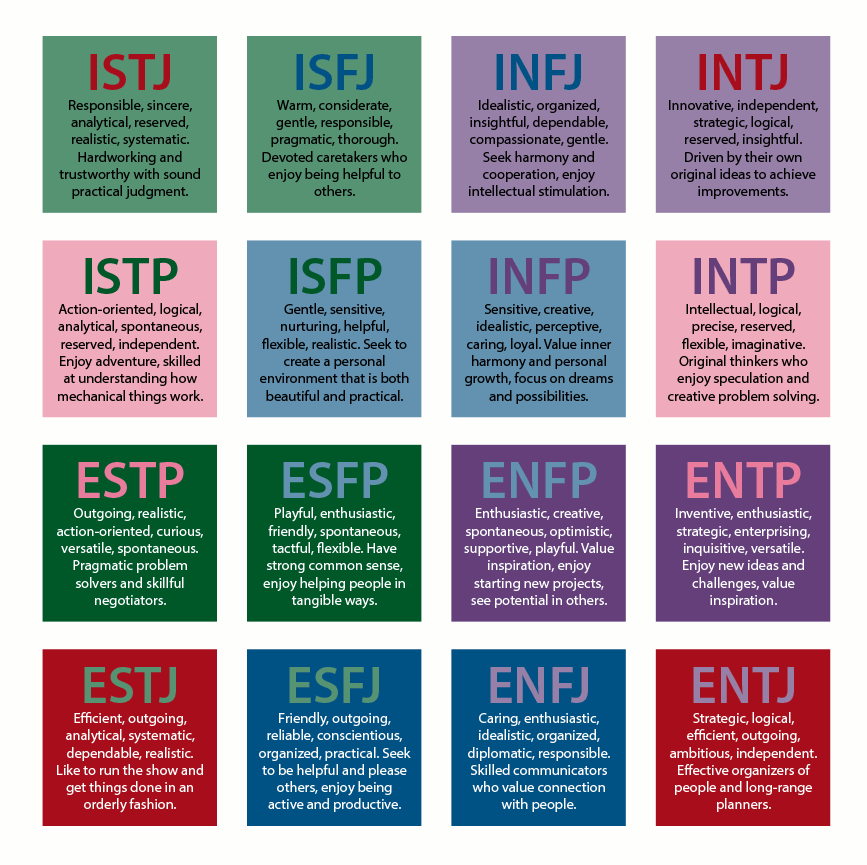
The MBTI Dichotomies And Why They're Problematic
The MBTI is structured around four pairs of opposing preferences, resulting in 16 unique personality types. Here's a closer look at each dichotomy:
Introversion (I) vs. Extraversion (E): This dimension reflects where individuals draw their energy from. Solitary activities energise introverts, while extraverts thrive in social settings.
Sensing (S) vs. Intuition (N): This dichotomy pertains to how people perceive information. Sensors focus on concrete, factual information, whereas intuitive types look for patterns and abstract possibilities.
Thinking (T) vs. Feeling (F): This axis relates to decision-making processes. Thinkers prioritise logic and objective criteria, while feelers consider personal values and their impact on others.
Judging (J) vs Perceiving (P): This preference describes one's approach to the external world. Judging types prefer structure and decisiveness, whereas perceiving types are more flexible and spontaneous.
While these categories can offer some insights into personality, their scientific validity and reliability are hotly debated.
Problem 1: Lack of Scientific Validity and Reliability
One of the main criticisms of the Myers-Briggs Type Indicator (MBTI) is its lack of scientific validity and reliability. Scientific validity concerns the extent to which a test measures what it purports to measure. In the case of the MBTI, research suggests it fails to assess personality traits accurately, as claimed. Reliability refers to the consistency of test results over time. Studies have shown that individuals often receive different personality type results when taking the test multiple times, indicating poor reliability (Pittenger, 1993). Costa & McCrae (1989), in their analysis of MBTI, found significant deficiencies. For example, the MBTI does not encompass all major dimensions of personality, unlike the Big Five. MBTI overlooks the Openness to Experience trait entirely, according to their research.
Problem 2: Inconsistent Results
Low test-retest reliability indicates that individuals often receive different MBTI results upon retesting (Boyle, 1995). This inconsistency undermines the MBTI's credibility as a stable measure of personality, as a reliable test should yield consistent results over time. If a person’s type changes with each administration, it casts doubt on the test's ability to accurately capture enduring personality traits. This instability suggests that the MBTI may not be a dependable tool for making significant personal or professional decisions based on personality assessment.
Problem 3: Absence of Predictive Validity
Another issue with the MBTI is its limited predictive validity, meaning it struggles to accurately forecast future behaviours or outcomes based on its personality categories. Research has shown that the MBTI is not effective at predicting job performance, career success, or personal satisfaction. This limitation arises because the MBTI does not account for the complexities and nuances of personality traits as effectively as more scientifically robust models, such as the Big Five. Consequently, the MBTI's utility in practical applications, like employment selection or personal development, is significantly diminished. (Pittenger, 1993); Furnham, 1996)3.
Problem 4: Dichotomous Scales
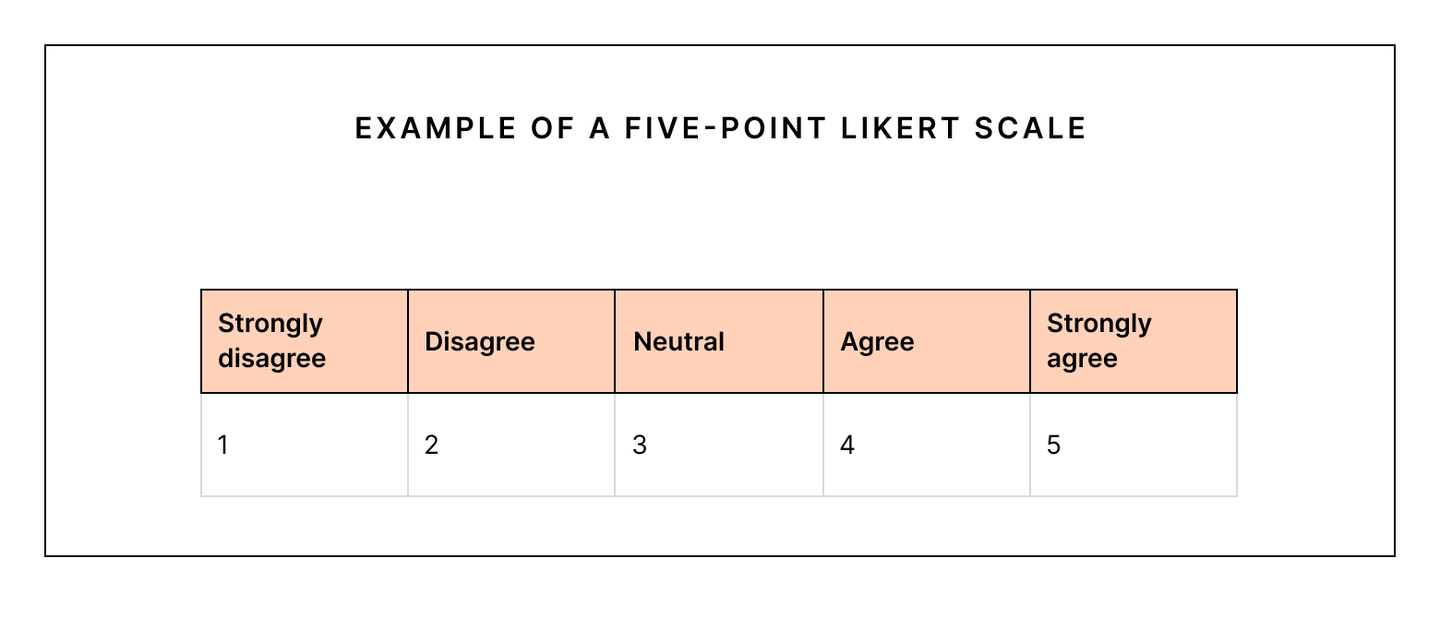
The MBTI's ipsative format (forced-choice) requires respondents to choose between two options for each question or statement. This oversimplifies the complexity of human personality because you may agree or disagree with the options offered —the measure presents a false dichotomy. This dichotomous approach fails to recognise that most personality traits exist on a continuum or within a constellation rather than as binary choices. Life is not this simple, unfortunately. For instance, an individual might exhibit both introverted and extraverted behaviours depending on the situation, a nuance the MBTI does not capture. By forcing individuals into rigid categories, the MBTI overlooks the true variability and richness of personality, limiting its accuracy and effectiveness (Costa & McCrae, 1989).
Problem 5: Real-World Implications
The MBTI's oversimplification can have significant real-world implications, especially in contexts such as career counselling, employee selection, and personal development. By categorising individuals into rigid personality types, it may lead to mismatches between people and their roles, potentially causing job dissatisfaction, reduced performance, and missed opportunities for personal growth. Furthermore, the forced-choice format can perpetuate stereotypes and limit the understanding of an individual's full range of abilities and traits, thus impacting decisions made in educational and professional settings (Pettinger, 1993).
Problem 6: Outdated Theoretical Foundations
The MBTI is based on Carl Jung's theories of psychological types, formulated in the early 20th century. While Jung's ideas were groundbreaking at the time, they lacked empirical support by modern scientific standards. Contemporary psychology favours evidence-based models grounded in extensive research and data.
Since Jung's time, personality psychology has evolved significantly. Researchers have developed more sophisticated models that are supported by extensive empirical data. These models consider the complexity and variability of human personality, offering a more accurate and comprehensive understanding than the MBTI.
Get A Personality Assessment From A Qualified Psychometrician
When you book an assessment, you'll receive an initial introductory call, a link to complete the GDPR-compliant assessment, and a follow-up debriefing call to help you understand what the results mean. I test for personality, motivation, well-being, cognitive ability and various forms of intelligence.
Limited Acceptance of MBTI in the Scientific Community
The scientific community has been largely critical of the MBTI and has proven more in favour of methodologically and structurally robust personality models. One such model is the Big Five personality traits, also known as the Five-Factor Model (FFM). The Big Five includes the following dimensions:
Openness to Experience: Creativity, curiosity, and willingness to explore new ideas.
Conscientiousness: Organisation, dependability, and discipline.
Extraversion: Sociability, assertiveness, and positive emotionality.
Agreeableness: Compassion, cooperation, and social harmony.
-
Neuroticism: Emotional instability, anxiety, and vulnerability to stress.
Empirical Support for the Big Five
The Big Five model is supported by extensive research and is considered the gold standard in personality psychology. Numerous studies have demonstrated its reliability and validity across different cultures and populations. Unlike the MBTI, the Big Five traits are measured on a continuum, providing a more accurate and nuanced understanding of personality.
Practical Applications
The Big Five has practical applications in various fields, including psychology, organisational behaviour, and personal development. It has been shown to predict important outcomes, such as job performance, academic success, and interpersonal relationships. This evidence-based approach contrasts sharply with the MBTI's more anecdotal and less scientifically grounded methodology.
The Appeal of the MBTI
Despite its scientific shortcomings, the MBTI's popularity persists (Grant, 2013). Understanding the reasons behind its widespread use can show why it continues to be a favoured tool for many. The MBTI's straightforward format makes it accessible to a broad audience. Its dichotomous questions are easy to understand, and the resulting personality types are simple to interpret and assign to oneself. This ease of use appeals to individuals and organisations looking for quick insights into personality.
Many people find the MBTI appealing because it offers a form of personal validation. The descriptions of the 16 personality types are often phrased positively, highlighting strengths and potential areas for growth. This positive framing can make individuals feel understood and appreciated. What we have seen here is that the scientific basis for its use is, at best, weak. The MBTI and other "type" approaches to personality, such as the DISC and others, are little more than a horoscope.
The MBTI has a long history and has become embedded in various cultural and organisational practices. Its widespread adoption in educational and corporate settings has created a sense of legitimacy, making it a default choice for personality assessment in many contexts. However, while the MBTI offers some insights and has its place in popular culture, moving towards evidence-based models like the Big Five can provide more accurate and reliable personality assessments.
With the need to accurately predict outcomes, individuals and organisations must make informed evidence-based decisions about which personality assessments to use. By promoting evidence-based models, we can improve the quality of personality research and its applications, and organisations can benefit from integrating the Big Five model into their practices. For instance, using the Big Five for recruitment and team-building can improve outcomes by providing a more nuanced understanding of employees' strengths and weaknesses. This approach can enhance organisational effectiveness and employee satisfaction (Barrick & Mount, 1991).
Individuals can use the Big Five model for personal development. By understanding their position on each of the five dimensions, they can gain insights into their behaviour, motivations, and areas for growth. This self-awareness can lead to more effective personal and professional development strategies (Roberts & Mroczek 2008).
Concluding Remarks
While the MBTI can be fun and engaging and perhaps stir curiosity around personality and identity, its lack of scientific foundation and reliability classifies it more as pseudoscience than a legitimate psychological tool. Its dichotomous scales, outdated theoretical underpinnings, and inconsistent results highlight its limitations. The Big Five traits, on the other hand, are recommended for those seeking a more accurate and reliable personality assessment.
What Next?
If you'd like to learn more about yourself or perhaps your employees and the type of work to which they are best suited, get in touch to arrange an assessment. Consultation and feedback on results are provided as part of the package.
References
Barrick, M. R., & Mount, M. K. (1991). The Big Five personality dimensions and job performance: A meta-analysis. Personnel Psychology, 44(1), 1-26.
McCrae, R. R., & Costa, P. T. (1989). Reinterpreting the Myers-Briggs Type Indicator from the perspective of the five-factor model of personality. Journal of Personality, 57(1), 17-40.
Mayer, J. D. (2005). A classification of DSM-IV-TR mental disorders according to their relation to the personality system. In B. L. G. J. Boyle, G. Matthews, & D. H. Saklofske (Eds.), Handbook of Personality Theory and Testing: Vol. 1: Personality Theories and Models (pp. 495-506). Sage Publications.
Pittenger, D. J. (1993). The utility of the Myers-Briggs Type Indicator. Review of Educational Research, 63(4), 467-488.
Grant, A. M. (2013). Goodbye to MBTI, the fad that won't die. Psychology Today.
Boyle, G. J. (1995). Myers-Briggs Type Indicator (MBTI): Some psychometric limitations. Australian Psychologist, 30(1), 71-74.
Furnham, A. (1996). The Big Five versus the Big Four: The relationship between the Myers-Briggs Type Indicator (MBTI) and NEO-PI five-factor model of personality. Personality and Individual Differences, 21(2), 303-307.
Pittenger, D. J. (1993). The utility of the Myers-Briggs Type Indicator. Review of Educational Research, 63(4), 467-488.
Roberts, B. W., & Mroczek, D. (2008). Personality trait change in adulthood. Current Directions in Psychological Science, 17(1), 31-35.